Papa Legba The Mysterious Guardian of the Crossroads pt 1
“Papa Legba, abre la puerta para mí, Papa Legba, abre la puerta para mí Abre la puerta para mí, Papa, ¡Para yo pasar, cuando vuelva yo le agradeceré al Lwa!
Abra la verja para el Lwa, abra la verja Papa Legba. Abra la verja para el Lwa, abra la verja, Papa Legba que hemos llegado, que esperaré por ellos aquí.”
“Papa Legba, open the door for me, Papa Legba, open the door for me, Papa Legba, I go to when I again thank the Lwa!
Open the gate to the Lwa, open the gate, open the gate for the Lwa for me Papa Legba, open the gate, Papa Legba and I will wait for then here.”
Papa Legba, the enigmatic Loa of the crossroads, embodies a duality that is both noble and chaotic. He is a figure of transformation, representing both order and disorder, creation and destruction. As the Divine Trickster, Legba governs the pathways of life, symbolizing the choices we make and the changes we undergo. He is the embodiment of paradox—a mischievous child and a wise elder, a force of vitality and fragility, life and death. In one moment, he may grant strength and health, and in the next, reveal the delicate nature of existence. Legba is the crossroads itself, where the divine and the human intersect, reflecting both our creative potential and our destructive tendencies.
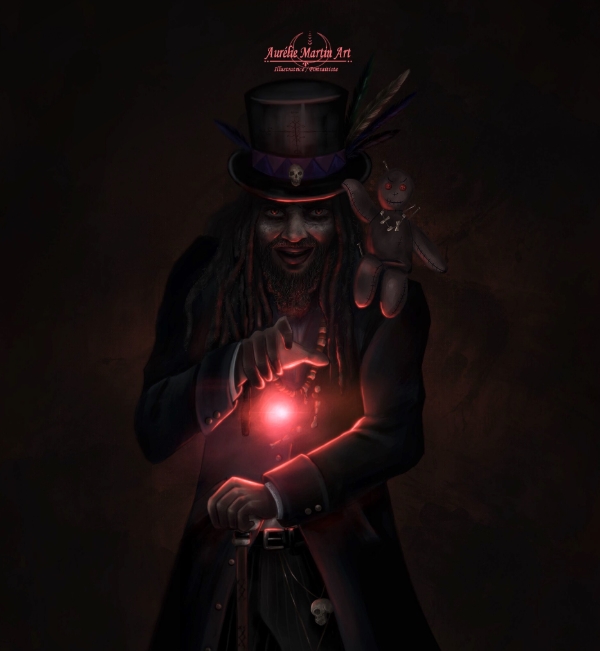
Legba is not a singular entity but a legion of spirits, ever-present and vigilant. He is both a bringer of blessings and a harbinger of chaos, capable of unleashing corruption or opening doors to abundance and opportunity. As one of the oldest Loa, he carries the wisdom of the ages, yet his energy is eternally youthful. He is the master linguist, the great messenger, and the keeper of the keys to the realms of the divine, the living, and the dead. Legba resides in every realm, often unnoticed, watching from the shadows, ready to act when called upon.
As the guardian of crossroads, pathways, entrances, and exits, Legba holds significant power over destiny, second only to Fa, the Divine Spirit of Destiny. Unlike Fa, who remains distant and unreachable, Legba is intimately connected to the human world, symbolizing his closeness to our daily lives. His presence is felt in every corner, every doorway, and every decision we face.
Legba’s nature is complex and often contradictory. As a trickster, he can be deceitful and malicious, disregarding social norms and boundaries. His actions may seem unjust or chaotic, but they often serve a greater purpose—restoring balance and guiding individuals toward reconciliation and growth. Like the Ghede, Legba has an insatiable appetite, and like Ogun, he is tireless in his work. He is a spirit of constant motion, never resting, always transforming.
Despite his chaotic nature, Legba is an essential figure in every spiritual tradition. He does not govern a specific kingdom or division but is a vital part of all. Without acknowledging Legba, the gates to other Loa remain closed. In Sanse and 21 Division traditions, Legba is known collectively as Lebanes, Lecuas, or Leguas. He is a master of chaos, and his presence ensures the flow of energy between realms. To insult or overlook Legba is to invite disorder into one’s life, as he holds the keys to opportunities and blessings.
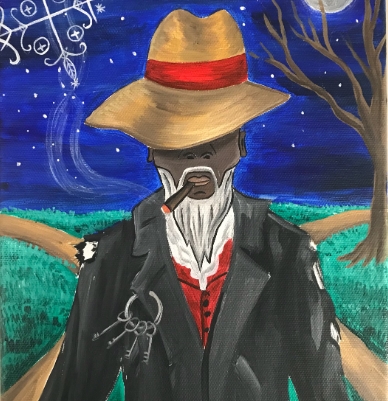
Legba is omnipresent, existing in every house, doorway, and pathway. He is the emissary of God, the intermediary between the living and the dead, the divine and the demonic. His moral judgment is often questioned, and his actions are unpredictable, making him a true mystery. In different traditions, Legba takes on various forms. In Africa and Cuba, he is seen as a youthful, phallic spirit with a voracious appetite for life and energy. In Haiti, he is Papa Legba, the wise, elderly sage. In Santo Domingo and Puerto Rico, he is associated with Saint Anthony of Padua, embodying both youth and wisdom.
Across traditions—Umbanda, Candomblé, Santería, Sanse, and others—Legba is always invoked first. He is the gatekeeper, and his approval is necessary for any spiritual work to succeed. Even in Espiritismo Criollo, practitioners knock on the wooden table three times to honor San Hilarion, ensuring Legba’s blessing before beginning any ritual.
Legba’s offerings vary depending on his manifestation. Younger Legbas enjoy sweets, toys, and sweetened coffee, while elder Legbas prefer rum, tobacco, and salty meats. His offerings are placed close to the ground, symbolizing his connection to the earthly realm. Younger Legbas dress in red and black, representing life and death, while elder Legbas wear brown, signifying their age and wisdom. Despite their differences, all Legbas share a common role as guardians of the crossroads and mediators between worlds.
In Santería and Sanse, Legba (often called Eleggua) is always saluted first. His presence is essential for any successful spiritual work, as he opens the doors to communication with other Loa. Without honoring Legba, the pathways remain closed, and the connection to the divine is lost. He is the Jefe of all saints, Loa, and Misterios, and his approval is the first step in any spiritual journey.
Papa Legba is a figure of profound complexity, embodying the mysteries of life, death, and transformation. He is the eternal trickster, the wise elder, and the youthful spirit, always present, always watching, and always ready to guide those who seek his wisdom. To understand Legba is to embrace the ever-changing nature of existence itself.